
"Brazil coffee history"
2000 article(s) found

Queen of Brazil Estate Yellow Bourbon Single Bean Flavor Description Variety Cultivation Development History Production Area Treatment Method Introduction
Brazil Population: 201033000 Brazil grows many different coffee varieties, many of which are cultivated and evolved in the country, such as yellow bourbon, Caturra and Catuai. SUL DE MINAS Historically, this area was the origin of Brazil's large coffee production

A brief introduction to the History and Culture of the Origin and Development of Yellow bourbon Fine Coffee beans in the balanced Sweet Queen Manor of Brazil
In addition to planting bourbon seeds, the delicacy and care of her treatment is another key to excellent quality: flavor features: balanced sweetness, smooth cream, orange fruit, apricot and other fruit flavor, chocolate, caramel flavor. The ripe fruit is sweet, caramel is sweet, flowers and nuts are sweet, and the end is thick and mellow with milk ester. Queen's Manor (Fazenda Rainha) (Queen Farm) is located in St.

A brief introduction to the history and culture of the origin and development of balanced sweet bourbon boutique coffee beans
Facts have proved that Brazil also has the ability to produce gourmet coffee and small batches of coffee. The local boutique coffee can not only be provided by small-scale coffee farmers. The main coffee producing areas in Brazil are Sulde Minas South Minas, Matas de Minas Minas Southeast Mountain Forest, Cerrado Hirado, Chapadas de Minas Minas Central and Northern Mausoleum, Mogiana Mojiana.

A brief introduction to the History and Culture of the Origin and Development of Brazilian Hilado Fine Coffee beans
Cerrado Syrador is a producing area. Cerrado Syrador coffee beans are treated by Brazilian traditional pulp natural drying (Pulped Natural). Because coffee beans are dried with pulp (Pulp) and pectin (Mucilage), they retain high organic matter, minerals and soluble solids. This kind of coffee bean has a strong aroma and is slightly sweet with Qiaokoli.
The specific characteristics of Brazilian coffee beans the history of which brand of Brazilian coffee is better?
Professional coffee knowledge exchange more information about coffee beans Please follow the coffee workshop (Wechat official account cafe_style) the largest producer Brazil is the largest coffee producer in the world. It accounts for about 1/3 of international output, and about 55 million bags are dominated by natural and ground natural coffee every year. As the largest producer, fluctuations in production affect global pricing. For example, Brazil is more
A brief introduction to the history and culture of the origin and development of balanced and supple Brazilian boutique coffee beans
Santos is a descendant of the bourbon species, hence the name for the port of Santos export. In the first three or four years before the coffee tree began to bear fruit, the beans were small and curved, with excellent flavor, and became Bourbon Santos. After that, the beans became bigger, flat in shape, no longer bent, and became flat bean Santos, and the flavor was not as good as before. Brazilian coffee can be found everywhere in Taiwan, but most of them

Brazil COE bid batch "Tango Manor half Sun Coffee beans how much is it? tango Manor History
Professional coffee knowledge exchange more coffee bean information please follow the coffee workshop (Wechat official account cafe_style) Brazilian coffee COE international competition: half-sun treatment group international third tango estate (Sitio Tanque) farmer: Merce Jordan Araujo Silva international judges flavor description: 89.47BlackBerry, lime, chocolate, caramel, Cabernet grape
An introduction to the History of Coffee cultivation in the Diamantina Valley of Brazil
For more information on coffee beans, please follow the coffee workshop (official Wechat account cafe_style) to produce coffee in Shapada Diamantina. It was rated as the best coffee in Brazil, about 560km from BA, the capital of the Brazilian state of Bahia, and the city of Piat, with a population of less than 20, 000, won the 15th Brazilian Coffee early Harvest Cup in 2014.
The history and characteristics of Brazilian coffee
Following Cafe Review (Wechat official account vdailycom) found that Beautiful Cafe opened a small shop of its own Brazil: the world's largest coffee producer to have a cup of coffee Sinio? On many occasions, Brazilians will ask you like this, for example, when you visit a friend, a hospitable host will ask you; when you talk to someone about business, your business partner will ask you; even when the mall is tired of shopping, sell

History of the development of coffee beans in Brazil, a big coffee country in the world, the influence of Brazilian coffee characteristics on world coffee production
The charm of Brazilian coffee is not as good as the unrestrained, warm and earth-shaking samba dance and the carnival that cannot stir up the tip of the tongue, but Brazilian coffee is thoroughly integrated into the blood of Brazilians who are happy to know their fate, and it touches the heartstrings of coffee lovers with its colorful flavor. it has a long aftertaste. An interesting historical story of Brazilian coffee was originally on more than 8.5 million square kilometers of land in Brazil.

Cultural stories about the History and Development of Brazilian Coffee beans the flavor and taste characteristics of Brazilian Arabica coffee varieties
Following Kaibei (official Wechat account vdailycom) found that Brazilian Coffee is famous for its strong aroma, but it has something to do with killer bees in Africa, whose stings scare everyone. In Brazil, South America, in 1956, scientists introduced dozens of killer bees from Africa, which were accidentally released from the hive. Like
Introduction to the history of Brazilian coffee, the steps of brewing Brazilian coffee.
Following Cafe Review (Wechat official account vdailycom) found that Beautiful Cafe opened a small shop of its own Brazilian Coffee History introduces Brazilian coffee, generally refers to coffee produced in Brazil. There are many kinds of Brazilian coffee, and like other Arabica coffee, Brazilian coffee is called Brazils to distinguish it from Milds coffee. The vast majority of Brazilian coffee is unwashed and sun-dried, according to

Brazilian Coffee Love History: drinking Coffee at the age of three created Brazilian Finch shit Coffee Jacu bird coffee
Professional coffee knowledge exchange more coffee bean information please pay attention to the coffee workshop (Wechat official account cafe_style) Brazil is not only a football kingdom, but also a coffee empire. Once the Brazilian coffee harvest fails that year, it will trigger a sharp rise in global coffee prices. The influence of Brazilian coffee can be more far-reaching than its football. Chen Hao once led the production team to Brazil and filmed it or not.

The Cultural History of Coffee in South America
[Colombia] is the world's second-largest coffee producer, accounting for about 12% of the world's annual output, which is much lower than Brazil's 30% to 35%, but most of them are high-quality mountain-washed beans. Central Colombia is divided into valleys by three north-south longitudinal mountains, of which the central and eastern mountains are the main coffee producing areas. The coffee here is named after the distributed market

The Development of Coffee beans Coffee History of South America
[Colombia] is the world's second-largest coffee producer, accounting for about 12% of the world's annual output, which is much lower than Brazil's 30% to 35%, but most of them are high-quality mountain-washed beans. Central Colombia is divided into valleys by three north-south longitudinal mountains, of which the central and eastern mountains are the main coffee producing areas. The coffee here is named after the distributed market
The Chronicle of the World History of Coffee
In 1933, the first automatic coffee extractor was improved; in 1935, a dwarf variant of Bourbon was discovered in Sao Paulo, Brazil, named Kaddura; in 1938, Nestl é developed a modern spray drying method in Brazil; in 1938, the Italian Achille Gaggia invented the pressure rod espresso machine; in 1941, German chemist Schulombom launched the filter cup and bottom.
Half-sun Brazilian Fine Coffee Manor Queen Manor Yellow bourbon Coffee Origin, Development, History and Culture
There are many large farms in Brazil, which run endless coffee plantations. They use machines to harvest and dry them. They are so efficient in automation that they regard coffee as a general agricultural material and completely abandon the flavor and flavor. As a result, many select coffee companies simply do not sell Brazilian beans so as not to demean themselves. In select coffee shops, Santos in Brazil still appears occasionally.

The history, culture, stories and allusions of the holy boutique beans of the Queen's Manor of Brazil
Professional barista exchanges please follow the coffee workshop (Wechat official account cafe_style) Brazil Queen Manor Saint boutique beans history and culture, stories and allusions Brazil Morgiana production area COE champion manor 100% yellow bourbon peel treatment Brazil Fazenda Rainha Yellow Bourbon Pulped Natural flavor description; raw beans with slightly
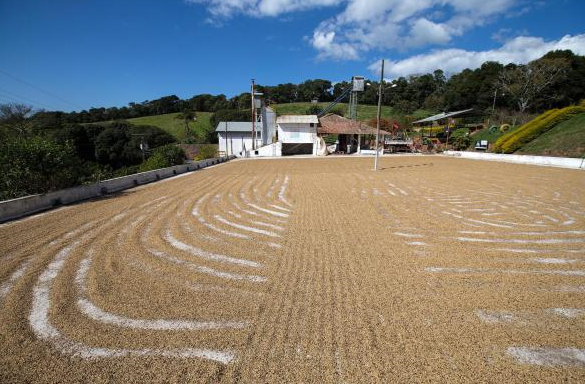
A century-old coffee inheritance of a Brazilian family-- Saydang Manor in Brazil
In the southeastern Brazilian state of Minas Gerais, which is famous for its mineral water, the pedestrian street in the center of San Lorenzo has a coffee shop full of customers, and the modern decoration and equipment stand out in the old city. The coffee shop belongs to the local Pereira family. The shop has been open for about 10 years, but his coffee has a history of more than a hundred years. In 1890, Jos é Isidro Pereira and his wife Nazarrett

Brazilian coffee amorous history Brazilian coffee price is low but the flavor is not bad how much is a cup of Brazilian coffee
Professional coffee knowledge exchange more coffee bean information please pay attention to the coffee workshop (Wechat official account cafe_style) Brazil is not only a football kingdom, but also a coffee empire. Once the Brazilian coffee harvest fails that year, it will trigger a sharp rise in global coffee prices. The influence of Brazilian coffee can be more far-reaching than its football. Chen Hao once led the production team to Brazil and filmed a lot.